
China’s social insurance system, known as ‘五险一金’ (Wǔxiǎn Yījīn), is a comprehensive framework designed to provide financial security and welfare benefits to its citizens.
‘五险一金’ translates to ‘Five Insurances and One Fund’.
This system, introduced in the 1990s, has evolved to cover a wide range of social insurance programs, ensuring that employees have access to essential benefits throughout their employment and into retirement.
Now the tricky part is finding a simple, clear overview of these policies without getting into the fine print and, well, things that 99.9% of employees and managers don’t need to know.
Benchmarking Professional Salaries Across China?
Explore real-time P25, P50, and P75 compensation bands, 13/14-month bonus structures, and verified market data across 30+ Chinese hubs.
So that’s what we’ll aim to do here today! We’ll keep it brief, super clear, and accompanied by some organized, official sources.
Onward with a top-line look at social insurance in China!
[ez-toc]
Hiring in China?
Post openings across China’s top job sites, classifieds, and networking platforms from $299 per role.
Social Insurance in China:
'Five Insurances and One Fund'
1. Pension Insurance (养老保险 yǎnglǎo bǎoxiǎn)
Pension insurance is intended to provide financial support to individuals after they retire.
Both employers and employees contribute to this fund. The contribution rates vary by region, but typically, employers contribute around 16% of the employee’s salary, while employees contribute approximately 8%.
Dive Deeper:
2. Medical Insurance (医疗保险 Yīliáo bǎoxiǎn)
This insurance covers part of the medical expenses incurred due to illness or non-work-related injuries.
The contribution rates for medical insurance also differ by region, with employers contributing between 5% and 12% of the employee’s salary, while employees usually contribute around 2%.
Dive Deeper:
Screen Candidates 10x Faster - Without the Bloat.
TeamedUp helps you find candidates. HireSquire helps you screen, evaluate, and interview them.
Skip the clunky, expensive legacy ATS systems. Use our sleek AI to smart-rank resumes, generate interview questions, and draft follow-ups in seconds. Built specifically for solo hirers, independent recruiters, and lean teams.
3. Unemployment Insurance (失业保险 Shīyè bǎoxiǎn)
Unemployment insurance provides financial assistance to individuals who have involuntarily lost their jobs.
Employers typically contribute about 0.5% to 1% of the employee’s salary, while employees contribute approximately 0.5%.
This insurance aims to support workers during periods of unemployment, helping them to maintain a stable income and find new employment opportunities.
Dive Deeper:
4. Work-related Injury Insurance (工伤保险 gōngshāng bǎoxiǎn)
This insurance covers medical expenses and compensation for employees who suffer injuries or illnesses related to their work.
The contribution rates for employers range from 0.5% to 2%, depending on the industry and job risk level.
Dive Deeper:
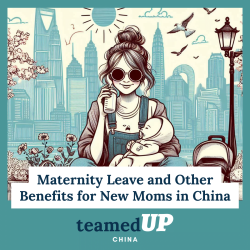
5. Maternity Insurance (生育保险 Shēngyù bǎoxiǎn)
Maternity insurance supports female employees during childbirth, covering part of their medical expenses and providing salary during maternity leave.
Employers usually contribute between 0.5% and 1% of the employee’s salary to this insurance.
Dive Deeper:
6. Housing Provident Fund (住房公积金 Zhùfáng gōngjījīn)
The Housing Provident Fund is a mandatory savings scheme that helps employees save for housing.
Both employers and employees contribute to this fund, typically at rates ranging from 5% to 12% of the employee’s salary. This fund is most commonly used for purchasing homes, home repairs, or paying rent.
Dive Deeper:
[ez-toc]
Hiring in China?
Post openings across China’s top job sites, classifieds, and networking platforms from $299 per role.